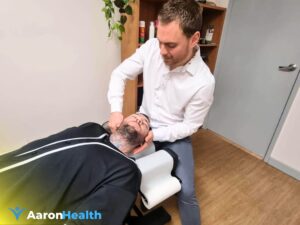

Gym injury prevention Bundaberg often starts well before the first lift. Across local gyms, our Bundaberg Chiropractors are seeing that more people are training consistently to improve strength, fitness and overall general health. While this is a positive trend, our clinic is seeing more preventable gym injuries linked to postural imbalances, poor technique and inadequate recovery rather than the exercises themselves.
Understanding how your body moves, how posture influences strength, and how preparation affects performance is essential for training safely and sustainably.

Why Injury Prevention Is Often Overlooked in Bundaberg
In Bundaberg, we consistently see injury prevention practices being misunderstood or undervalued. Many gym-goers focus on performance goals; lifting heavier, training harder or pushing intensity without giving the same attention to preparation and recovery.
Prevention is often viewed as something only relevant after an injury occurs. However, a typical gym-related injury can take six to twelve weeks on average to fully recover. That time away from training and in some cases work quickly outweighs the few minutes it would take to warm up, cool down, stretch or address posture imbalances. From a practical standpoint, incorporating injury-prevention strategies simply makes sense especially for those who train regularly or need their bodies for work.
This mindset shift is a key component of effective gym injury prevention Bundaberg athletes benefit from long term.
How Pre-Existing Postural Imbalances Increase Injury Risk
Many Bundaberg gym-goers arrive at the gym with movement patterns shaped by years of sitting at a desk, driving, poor posture during phone use and repetitive work. These habits often create muscle imbalances that distort how the body handles load.
Two of the most common patterns we see locally are upper crossed syndrome and lower crossed syndrome.
Upper crossed patterns involve tight chest and upper traps with weak neck and upper back muscles, causing rounded shoulders, forward head posture and increased strain.People with this problem usually experience headaches, neck pain and shoulder pain.
Lower crossed patterns often involve tight hip flexors and lower back muscles combined with reduced activation of the glutes and deep abdominal stabilisers. This alters pelvic position and increases stress on the lower back, particularly during squats, deadlifts and hinging exercises. People with this problem usually experience persistent lower back pain and report a dull ache and even sciatica as the condition progresseses.
These patterns commonly contribute to the types of discomfort discussed on our back pain Bundaberg page.
Incorrect Lifting Technique and Lifting Too Heavy
Another major contributor to gym-related strain is lifting weights that exceed the body’s ability to control them safely. Many injuries occur not at maximal effort, but when technique breaks down under excessive load.
We recommend avoiding loads above body weight without proper technique and supervision to reduce strain.
When loads become too heavy, the body compensates more often, leading to lower back rounding, excessive arching or uneven loading.Over time, these compensations may contribute to symptoms similar to those outlined on our sciatica page.
Ironically, Bundaberg chiropractors find most injuries happen loading and unloading weights, not during the exercise itself. This is an important point as it shows that injury can occur in the most trivial of moments.
Why Warm-Ups Must Address More Than Temperature
Warming up is essential for gym injury prevention in Bundaberg, but raising heart rate alone is not enough. Effective warm-ups improve joint mobility, activate underused muscles and prepare the body for load.
Without correcting postural imbalances, the body reverts to poor movement patterns once weight is added, regardless of warm-up time.
This is where posture awareness becomes important. Our posture assessment service helps identify movement patterns that may increase strain during training.
The Importance of Cooling Down After Training
Cooldowns are frequently skipped, yet they play a critical role in recovery and injury prevention. Without adequate cooldowns, muscles remain in shortened or overworked states, reinforcing the same imbalances that increase injury risk.
Gradually reducing intensity and incorporating mobility-focused movement supports circulation, reduces stiffness and helps prevent recurring discomfort that may develop into patterns associated with chronic pain.
Using Mirrors and Trainers to Improve Technique
Mirrors help prevent injuries by allowing gym-goers to spot posture issues, uneven loading and poor alignment during lifts.
Asking for feedback also improves technique and movement setup. Most personal trainers in Bundaberg gyms are approachable, supportive and happy to help with proper form and load selection.

Why Addressing Imbalances Early Makes a Difference
When posture imbalances and poor lifting habits are addressed early, training becomes safer, more effective and more sustainable. Ignoring them often leads to recurring discomfort that disrupts consistency, which is one of the biggest barriers to long-term progress.
At Aaron Health Chiropractic Bundaberg, we regularly support active individuals who want to train confidently while reducing unnecessary strain. Understanding how posture, movement patterns and recovery interact is central to effective gym injury prevention Bundaberg strategies.
Conclusion: Prevention Saves Time, Pain and Progress
Gym injuries rarely happen at random. Poor technique, accumulated imbalances, excessive loading and insufficient recovery usually cause them. Since many injuries take 6–12 weeks to heal, using preventative strategies is far more effective than stopping training altogether.
By warming up properly, respecting load limits, correcting posture, cooling down and seeking feedback when needed, Bundaberg gym-goers can reduce injury risk and train with confidence.