

Occupational posture in Bundaberg workers varies widely depending on industry. However our Bundaberg Chiropractors consistently see that poor work posture remains one of the most consistent contributors to ongoing discomfort across the region. From desk-based roles and healthcare work to trades, driving and retail, many Bundaberg locals spend long hours in positions that place repetitive strain on the spine and surrounding muscles.
Unlike sudden injuries, posture-related problems tend to develop gradually. They often go unnoticed until stiffness, reduced movement or persistent discomfort begins to interfere with work or daily life. Understanding how different occupations influence posture can help explain why these issues are so common locally.
Why Occupational Posture Issues Are Common in Bundaberg
Bundaberg has a diverse workforce that includes office workers, tradies, healthcare staff, retail employees, drivers and FIFO workers. While these roles differ physically, many share one common factor: prolonged time spent in fixed or repetitive postures.
Over time, the body adapts to these positions. Muscles that are used repeatedly become tight and dominant, while others weaken due to underuse. This imbalance alters how the spine moves and bears load, contributing to occupational posture issues for Bundaberg locals. Our clinic frequently see people presenting with neck, shoulder or lower back discomfort.
These patterns are closely linked to the issues outlined on our posture assessment page.
Desk-Based and Office Work Posture in Bundaberg
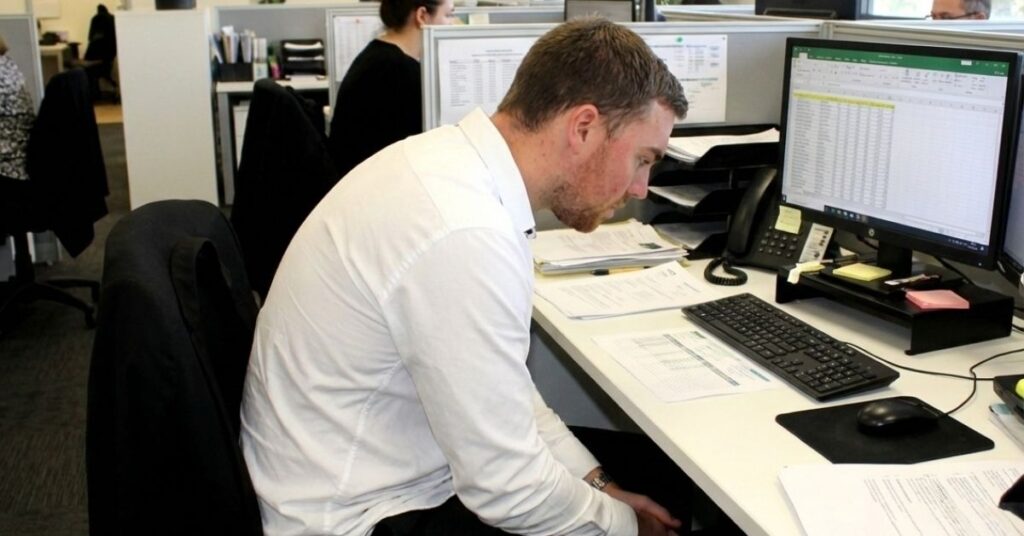
Office and administrative roles often involve long periods of sitting, screen use and minimal movement variation. Common posture patterns include forward head position, rounded shoulders and reduced spinal movement throughout the day.
While sitting itself isn’t harmful, remaining in the same position for extended periods increases muscle fatigue and joint stiffness. Many Bundaberg office workers report discomfort that worsens toward the end of the day or after long weeks at work.
These posture-related patterns frequently contribute to symptoms discussed on our neck pain and back pain Bundaberg pages.
Trades, Manual Work and Occupational Posture in Bundaberg
Tradespeople and manual workers face different posture challenges. Repetitive lifting, bending, twisting and working in awkward positions place uneven load on the spine over time. Even when tasks are performed correctly, repeated exposure without adequate recovery can lead to stiffness and imbalance.
Many tradies don’t experience immediate pain, but instead notice gradual tightness or reduced mobility, particularly through the lower back and hips. These posture-related changes are a common form of occupational posture in Bundaberg workers experience in physically demanding roles.

Healthcare, Retail and Standing-Based Roles
Healthcare workers, retail staff and others who spend long hours standing often experience posture strain in different ways. Prolonged standing can increase lower back fatigue, while repetitive reaching, lifting or patient handling can place stress on the upper body.
Neck and shoulder tension is particularly common in these roles, especially when combined with forward head posture or asymmetrical movements. Over time, these demands can contribute to discomfort patterns similar to those described on our chronic pain resource.
Driving and Occupational Posture Issues
Driving-based occupations like delivery drivers, sales roles and FIFO travel all involve long periods of seated posture with limited movement. Poor seat setup, reduced lumbar support and sustained sitting all increase spinal load.
Over time, this can lead to stiffness through the lower back and hips, as well as nerve-related discomfort such as that discussed on our sciatica page. Driving posture is one of the most underestimated contributors to issues for occupational posture in Bundaberg
Why Posture Problems Often Go Unnoticed at Work
One of the challenges with occupational posture issues is that they rarely cause immediate pain. Many workers remain productive and functional, gradually adapting their movements to avoid discomfort.
These compensations allow work to continue, but they also reinforce poor movement patterns. Over time, stiffness and reduced mobility become more noticeable often outside of work hours or during periods of rest. Patients will often report to our local chiropractors that their stiffness lasts for longer as their condition worsens over time.
Addressing Occupational Posture Issues in Bundaberg
Supporting occupational posture isn’t about perfect alignment or rigid sitting positions. Instead, it focuses on:
- improving movement variety
- reducing sustained static positions
- restoring balance between muscle groups
- supporting spinal mobility
How Our Bundaberg Clinic Supports Work-Related Posture
At Aaron Health Chiropractic, we regularly work with Bundaberg locals from a wide range of occupations. Our focus is on understanding how work demands influence posture, movement and spinal comfort.
By identifying occupational patterns early, many people find it easier to manage discomfort and maintain function throughout the working week.
Learn more about our local approach here:
👉 Aaron Health Chiropractic Bundaberg
Work Related Posture Matters More Than You Think
Occupational posture Bundaberg workers are exposed to every day plays a significant role in long-term comfort and mobility. Whether work involves sitting, standing, lifting or driving, posture-related strain often builds gradually rather than appearing suddenly.
Understanding how your occupation influences posture is an important step toward maintaining spinal comfort and supporting long-term musculoskeletal health.