

Sport injuries are one of the most common reasons junior athletes miss training or lose confidence in their sport. In Bundaberg, kids are active across netball, basketball, cricket, soccer, swimming, touch football, and school athletics. That year round activity is a big positive. It also increases exposure to sport injuries, especially during growth spurts and busy competition periods.
This article explains the most common sport injuries we see in junior athletes, why they happen, and what parents can watch for early. The aim is to help families understand patterns, not to diagnose. If you want a deeper overview of common sporting injury patterns and contributing factors, see our education page on sports injuries.
Why sport injuries show up more often in Bundaberg kids
Most sport injuries in children are not random. They usually appear when a few factors stack up at the same time.
First, many Bundaberg kids play more than one sport across the year. Seasons often overlap. A child might finish netball and move straight into basketball, or play weekend sport while still doing school athletics. When rest drops, fatigue rises. Fatigue can change movement quality, which increases injury risk.
Second, Bundaberg heat and humidity matter. Kids can fatigue earlier in sessions and late in games. When the body is tired, landing control and coordination can slip. That is often when ankles roll, knees get irritated, and muscles overload.
Third, growth spurts create a temporary mismatch between bones, muscles, and control. Bones can lengthen quickly. Muscles and tendons often catch up later. During that window, a child can feel tight, less coordinated, or slower to recover. Sport injuries become more likely in sports that involve jumping, sprinting, twisting, and overhead actions.
Why timing matters with sport injuries in children
Timing is one of the biggest differences between sport injuries in kids and injuries in adults. Children are adaptable. Their movement patterns can change quickly, for better or worse.
When early warning signs are noticed and training loads are adjusted, many kids settle well. When discomfort is repeatedly pushed through, a child may compensate. They might land differently, avoid one side, or change their running stride. Those changes can become habits. Over time, habits can load other areas and increase the chance of recurring sport injuries.
Early awareness is not about restricting sport. It is about recognising when the body is under more stress than usual and responding before problems repeat.
Ankle sprains in junior athletes
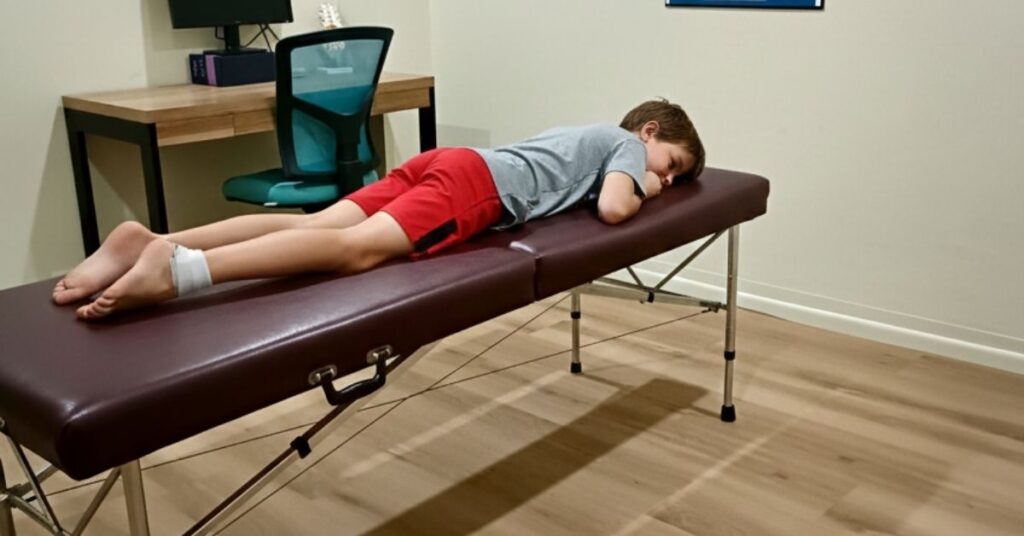
Ankle sprains are among the most common sport injuries in netball, basketball, soccer, and touch football. These sports demand quick direction changes and frequent jumping. A single awkward landing or a step onto another player’s foot can overstretch the ligaments and create swelling and pain.
The more important pattern is recurrence. A child who sprains an ankle once may lose some balance confidence. They may also develop subtle instability. If they return to full speed before the ankle is moving and controlling well, the sprain can repeat. Recurrent ankle sport injuries can also influence how the knee and hip load during running and landing.
Parents often notice this as hesitancy when changing direction, or a child who avoids pushing off one foot.
Knee pain during growth and peak seasons
Knee discomfort is very common in teens who play basketball, AFL, soccer, and athletics. In many cases, it builds gradually rather than starting from one incident. This often reflects a rise in training intensity, a jump in competition load, or a rapid growth phase.
During adolescence, the tissues around the knee can become sensitive to repetitive jumping and sprinting. Some kids feel pain around the kneecap. Others feel it at the top of the shin. Symptoms often fluctuate across the season. A week of heavy games can flare it. A week of lighter training can settle it.
This is one reason sport injuries in teenagers often look like patterns rather than single events. Parents can support their child by paying attention to how pain tracks with load, fatigue, and recovery.
Shoulder irritation in overhead sports
Bundaberg has strong swimming and cricket participation, plus volleyball and throwing sports at school. Overhead activity loads the shoulder repeatedly. When training volume climbs quickly, the stabilising muscles can fatigue. That fatigue can change shoulder mechanics.
Early signs can include tightness, reduced range of motion, discomfort during the pull phase of swimming, or soreness after bowling or throwing. Shoulder sport injuries in young athletes usually develop over time. They often reflect gradual overload, especially when recovery, sleep, and strength control do not match the training demand.
Lower back discomfort in developing athletes
Lower back sport injuries appear more often in sports that involve repeated bending, extension, twisting, or landing. Gymnastics, dance, rowing, and football can all create those demands.
During growth spurts, coordination and control can temporarily change. A child may rely more on the lower back rather than distributing load through the hips and trunk. That can increase strain during training, especially when fatigue builds. In many cases, back discomfort reflects a movement control issue rather than structural damage.
Parents may notice stiffness after sport, discomfort with prolonged sitting, or a child who avoids bending or twisting.
Muscle strains during growth phases
Muscle strains in hamstrings, calves, and groin tend to occur when speed increases, training volume climbs, or flexibility does not keep pace with growth. During growth spurts, kids can feel tighter through the back of the legs. Sprinting and sudden acceleration then place higher demand on muscles that are not yet adapting well.
Bundaberg conditions can also add fatigue. Tired muscles absorb force less efficiently. That can increase overload risk late in sessions. Many sport injuries of this type show up during tournaments and weeks with multiple games.
Wrist and hand injuries in ball sports
Basketball, netball, and cricket create plenty of wrist and hand sport injuries. They can occur from awkward catches, collisions, and falls onto an outstretched hand. Younger children can also be more vulnerable to minor fractures because their bones are still developing and their wrists may be relatively flexible.
Parents should take wrist complaints seriously when swelling, reduced grip, or pain with pushing and pulling persists.
What parents often notice before a child complains
Kids do not always report discomfort early. Parents often see the first clues in movement.
Common signs include a limp, hesitation before jumping, a child who avoids one side, or a drop in speed and confidence. Some children start asking to sit out drills they usually enjoy. Others look more tired earlier in the session than expected. A change in posture after sport can also be a sign the body is protecting an irritated area.
These signs do not always mean injury. They do suggest the body is under strain and may benefit from a closer look at load, recovery, and movement quality.
Practical ways to reduce sport injury risk without overcomplicating things
Most sport injuries are influenced by habits that are simple and consistent.
Warm ups help when they are done with intent, not rushed. Hydration matters, especially in Bundaberg conditions. Sleep supports recovery and coordination. Rest days reduce accumulated fatigue, even for kids who feel fine. Training increases should be gradual when possible, especially after holidays or during growth spurts.
Parents can also support good communication. If a child knows they can mention discomfort without being pulled from sport unnecessarily, they are more likely to speak up early. That makes sport injuries easier to manage and less likely to repeat.
Supporting confident movement in Bundaberg junior athletes
Junior athletes should be able to enjoy sport, build skills, and stay confident in their bodies as they grow. Sport injuries can happen in any active child. The key is understanding the patterns that drive them, especially during busy seasons and growth phases.
When families understand why these issues occur, they can make better decisions about rest, load, and early warning signs. That approach supports long term participation and healthier movement, even through the most demanding stages of development.