

Our Bundaberg Chiropractic clinic is seeing an increase in back pain from nurses in Bundaberg and other healthcare workers. Nurses and healthcare workers form the backbone of the Bundaberg community. From hospital wards and aged care facilities to medical centres and in-home care, these roles are physically demanding in ways many people don’t fully appreciate. Over time, it’s common for healthcare professionals to experience ongoing discomfort particularly nurse with back pain in Bundaberg.
What makes healthcare work unique is the combination of physical load, long shifts, emotional stress and limited recovery time. Many nurses push through back pain for years, only seeking support when stiffness or pain begins to interfere with work or daily life. Understanding how this strain develops is the first step in managing it more effectively.
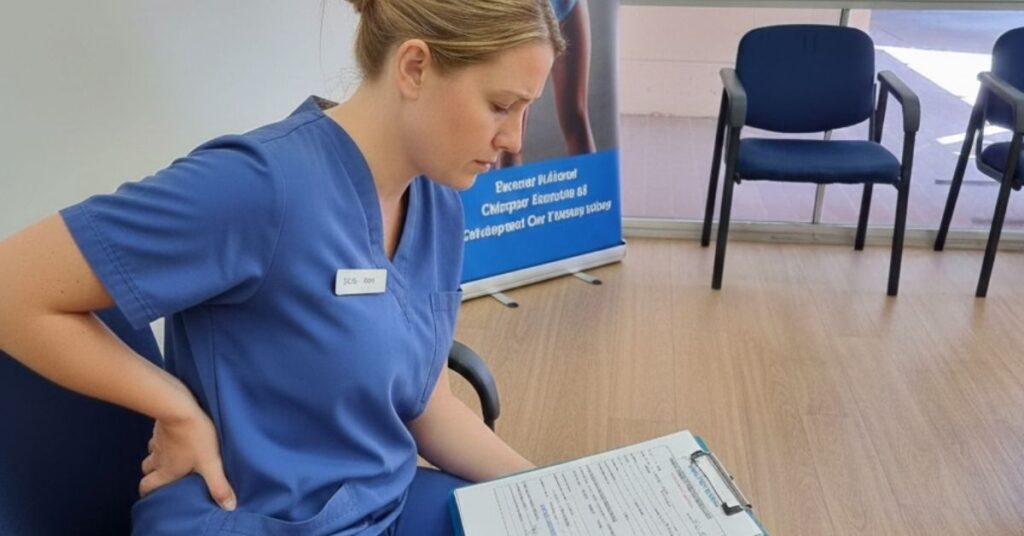
Why Physical Strain Is So Common in Nursing Roles
Healthcare work places constant demands on the body. Tasks such as patient transfers, repositioning, prolonged standing, bending over beds, and assisting with mobility all require repeated spinal loading. Unlike controlled gym movements, these actions are often unpredictable and performed in tight or difficult spaces, which increases physical stress.
For many Bundaberg nurses, this strain accumulates quietly year after year. Early signs may include a stiff lower back after a shift, tight shoulders during night duty, or fatigue that lingers into days off. Over time, these patterns can develop into more persistent back pain for nurses of Bundaberg and healthcare workers.
For a broader explanation of spinal strain, you can explore our back pain Bundaberg resource.
The Impact of Long Shifts and Repetitive Movement
Extended shifts place additional pressure on the spine. Standing or walking for long periods without adequate posture variation causes postural muscles to fatigue, particularly through the lower back and hips. When fatigue sets in, posture naturally deteriorates, increasing strain on spinal joints and surrounding muscles.
Repetitive movements, such as bending forward to assist patients or reaching across beds, further compound this load. These patterns are a major contributor to a nurse with back pain, especially among staff working in acute care and aged care environments.
Manual Handling and Its Effect on the Spine
Even with correct manual handling training, the physical reality of healthcare work means the spine is frequently under load. Patients move unpredictably, beds and equipment vary in height, and time pressures can limit ideal positioning.
This ongoing mechanical demand can also contribute to symptoms that extend beyond the lower back, such as upper back tightness, shoulder fatigue or even nerve-related discomfort. In some cases, long shifts involving lifting and twisting can aggravate symptoms similar to sciatica, particularly when recovery time is limited.
Why Many Nurses Don’t Address Pain Early
A common theme among healthcare workers is prioritising others before themselves. Many Bundaberg nurses dismiss early discomfort as “part of the job” and continue working through it. Unfortunately, ignoring early signs often allows strain and chronic issues to accumulate further.
As workloads increase or recovery time decreases, what was once mild stiffness can become more noticeable and harder to manage. This is when many nurses begin seeking support from a chiropractor in Bundaberg to better understand what’s contributing to their discomfort.
The Role of Posture and Recovery in Healthcare Work
Posture plays a major role in how the spine handles physical demands. Leaning forward for extended periods, working with arms outstretched, or standing with uneven weight distribution can all increase spinal fatigue. Over long shifts, these habits can significantly influence how the body feels at the end of the day.
Equally important is recovery. Without sufficient movement variation, stretching, or posture awareness outside of work, the spine has little opportunity to reset. This is why posture-focused strategies, such as a posture assessment, can be valuable for nurses looking to manage ongoing strain.
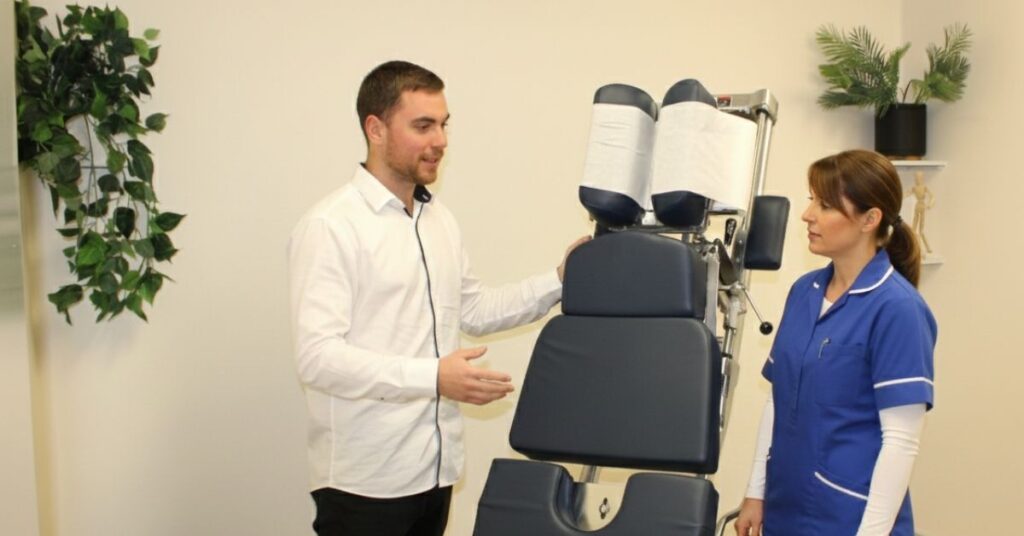
When Physical Strain Becomes Chronic
If physical stress continues without intervention, discomfort may persist beyond work hours. Lingering stiffness on days off, difficulty relaxing after shifts, or pain that returns quickly once work resumes may indicate a developing chronic pattern.
For healthcare workers experiencing long-term discomfort, our chronic pain information page provides insight into how persistent strain can affect the body over time.
How Our Bundaberg Clinic Supports Nurses and Healthcare Workers
At Aaron Health Chiropractic Bundaberg, we regularly work with nurses, carers and allied health professionals who experience physical strain related to their roles. Our approach focuses on understanding work demands, posture habits and movement patterns unique to healthcare environments.
We support healthcare workers by:
- Assessing spinal movement and posture
- Identifying contributing work-related patterns
- Supporting joint mobility and muscular balance
- Providing education tailored to shift work and recovery needs
- Taking a proactive and preventative approach
Our goal is not to change the demands of your job, but to help your body manage them more comfortably.
To learn more about how we support local healthcare professionals, visit our Bundaberg chiropractor page.
Conclusion: Supporting the Bodies That Care for Our Community
Nurses and healthcare workers give so much to the Bundaberg community, often at the expense of their own physical wellbeing. Understanding why nurse with back pain in Bundaberg is so common helps highlight the importance of posture awareness, recovery and early support.
If you’re a nurse or healthcare worker experiencing ongoing stiffness or discomfort, personalised guidance may help you better manage the physical demands of your role.
👉 Learn more or book an appointment at our Bundaberg clinic:
https://aaronhealth.com.au/locations/bundaberg-chiropractor/